
Why Does Homemade Cornbread Dressing Take So Long?
This post may contain affiliate links at no extra cost to you (because ya girl’s gotta eat!) View our privacy statement HERE.

Homemade cornbread dressing takes me about two hours to make… And yes, that’s longer than my Thanksgiving turkey! I feel every minute of those two hours, too.
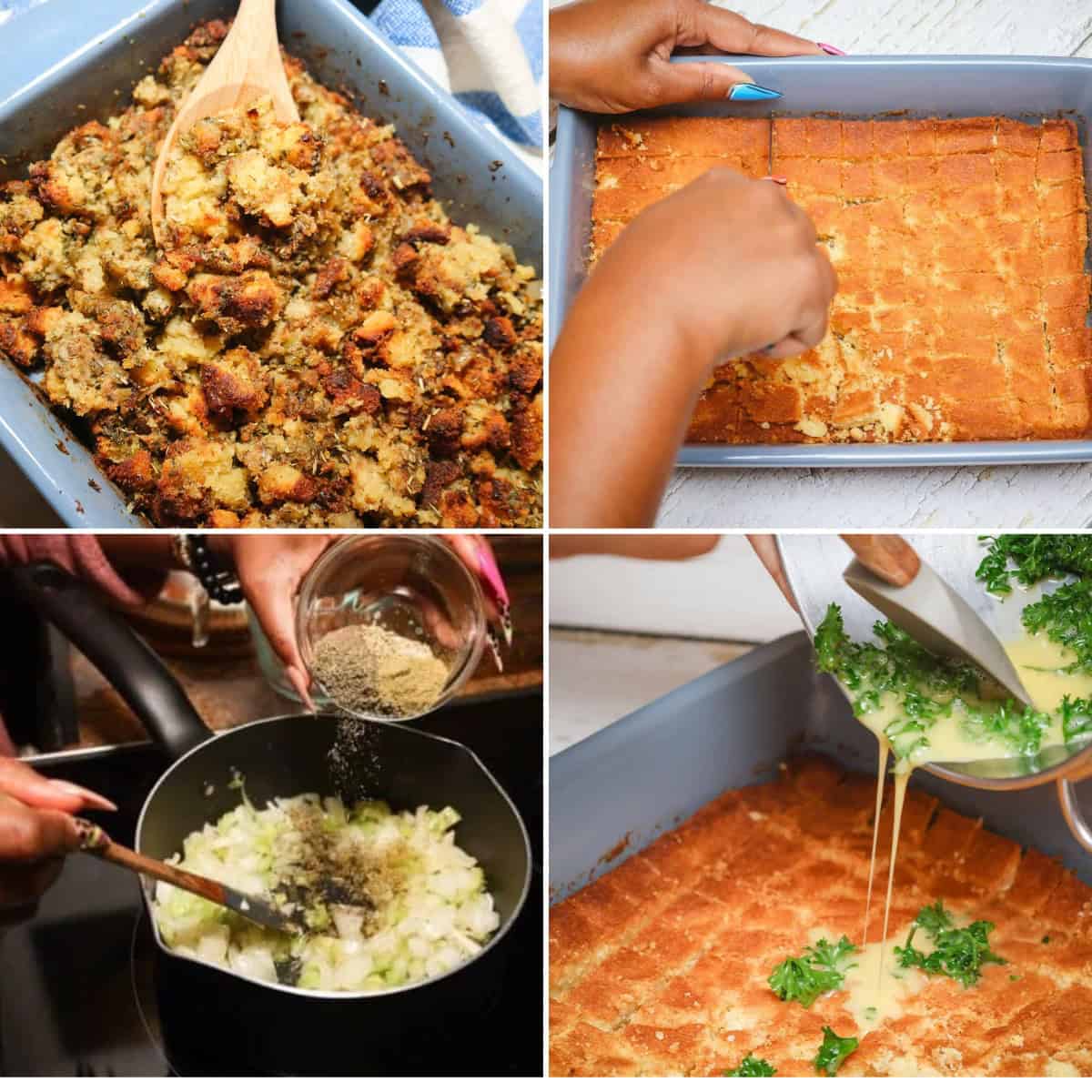
“Make the dressing” isn’t actually one task; it’s four
Here’s what I’ve learned after making and testing my cornbread dressing recipes over and over for years…
My process is:
- Make the cornbread and cube it.
- Sauté the vegetables, herbs, and seasoned broth base.
- Assemble the dressing and bake it covered.
- Bake it uncovered to finish the top.
No single step is especially difficult. It’s the way the steps stack one after another and require you to pay attention. That makes homemade dressing feel like one of the biggest jobs on the Thanksgiving menu.
Dressing is not a drop-and-walk, set-it-and-forget-it situation! But once you understand what each step is doing and what the dressing should look like along the way, the process becomes much easier to manage.
And most importantly? You can stop wondering whether you’re about to serve everybody a pan of dry cornbread—or mush. Yikes!
Why Black folks cook it this way
Dressing is THE potato salad of Thanksgiving. (And yes, we’re probably having actual potato salad, too!)
But dressing is one of those dishes a traditional Black Thanksgiving table simply isn’t expected to be without. It’s also not usually the dish you casually assign to somebody who’s making it for the first time.
Experienced hands, please report for duty.
And there’s a reason for that. The texture matters. The seasoning matters. The moisture matters. And because dressing occupies such an important place on the Thanksgiving plate, everybody knows when one of those things isn’t right.
So, sorry, not sorry. That’s the soul food Thanksgiving real.
💡 I’ve already thought this through: What should cornbread dressing look like?
If dressing makes you nervous, remember this: Moist, not wet, and definitely not dry.
Before my dressing goes into the oven, the cornbread has absorbed the seasoned broth, so it’s moist. Most of my cornbread is still visibly cubed, while some pieces have naturally softened and crumbled from the liquid.
But there should not be broth pooling in the pan. And it shouldn’t look soupy. And if you scoop up a spoonful, it shouldn’t behave like one solid mass. It should be moist while still having some soft, textured pieces of cornbread that can fall away.
This is dressing, after all, not bread pudding!
That texture isn’t accidental. I’ve tested this recipe over and over for years to find the balance of cornbread, broth, butter, herbs, vegetables, and seasonings that gives me the dressing I actually want to eat.
I’ve already walked the seasoning-and-broth tightrope so you don’t have to.
Why does homemade dressing take so long?
Because it’s homemade! LOL! But more specifically, there are four separate stages between “I need to make the dressing” and the finished baking dish. Here’s what actually happens in my kitchen.
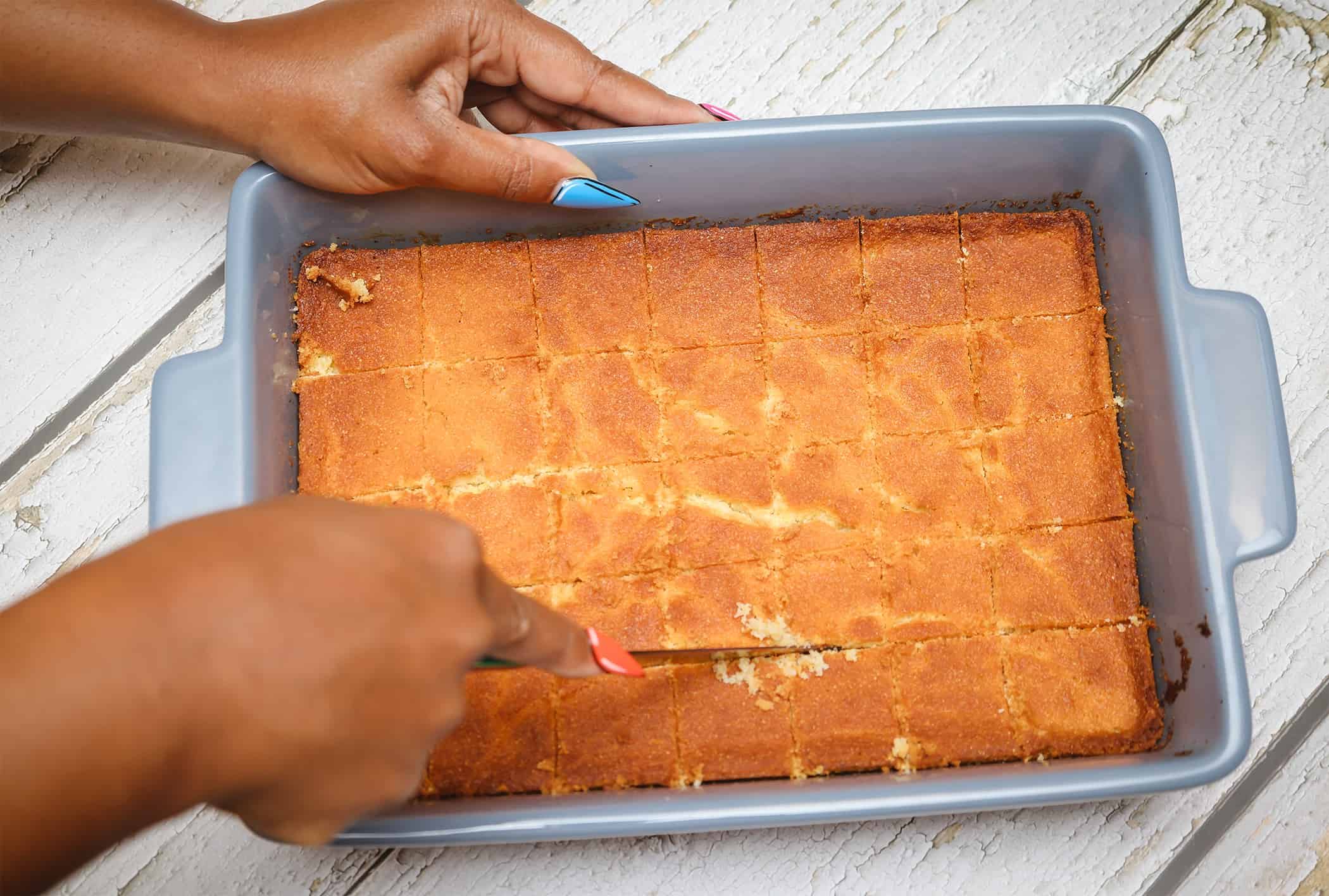
Step 1: Make the cornbread—and cube it
I make my cornbread the same day I make my dressing. You may have heard that dressing requires stale or day-old cornbread. That may work for someone else’s recipe, but it’s not what I do. And you already know how I feel about turning one recipe into a multiple-day event unnecessarily, so I don’t make this recipe ahead.
I bake the cornbread, let it cool for about 10 minutes, cube it, and move directly into the next stage. By the time I’ve prepared my vegetables, herbs, and broth base, the cornbread has had plenty of time to cool.
🥄 Shaunda says: Don’t crumble the cornbread. This is one of the things that makes my dressing different: I intentionally cube my cornbread instead of crumbling it. I eat with my eyes first, and I want my dressing to have an attractive texture and presentation.
As a kid, I wasn’t especially fond of homemade cornbread dressing because, to me, it often sliced like a tightly packed square and mostly tasted like overly savory cornbread.
So when I grew up? I carefully curated the dressing I wanted to see and taste. Mine has texture beyond mush. Yep, I said it!
Cubing the cornbread helps me create a dressing that isn’t a pressed-together square when sliced. Instead, you get soft pieces and a little cubed crumble throughout—a buttery, moist dressing with enough texture to make every bite interesting.
And the cornbread itself matters. For my dressing, I use cornbread made with butter, sugar, heavy whipping cream, and cream cheese because that buttery-sweet foundation balances the deeply savory herb and broth mixture coming next.
Step 2: Build the savory broth, vegetable, and herb base
If the cornbread brings the buttery-sweet side of the equation, this step brings the savory. I sauté onion and celery with a carefully balanced mixture of:
- Thyme
- Rosemary
- Sage
- Parsley
- Chicken stock
- Salt
- Pepper
🥄 Shaunda’s signature flavor touch
And yes: You MUST sauté the vegetables! I don’t want crunchy onions or celery announcing themselves in the finished dressing. Sautéing softens both their texture and flavor so they become part of the dressing rather than competing with it.
And when those vegetables and herbs start sautéing? That’s the smell.
That unmistakable, nostalgic, anticipatory smell that tells you a soul food Thanksgiving is happening in this kitchen!
Chicken stock is my first choice for the broth because it also helps balance the sharpness of those green herbs—especially sage. Vegetable stock can work for a vegetarian variation, but chicken stock is the flavor balance I prefer.
Don’t let the sage take over
Sage does some heavy lifting in dressing. It’s also one of those herbs I rarely bring out until the holidays, so its aroma immediately says Thanksgiving to me.
But more isn’t necessarily better.
Too much sage or rosemary can push dressing from beautifully savory into a sharp or bitter bite. That’s why my herb mixture is intentionally balanced with the stock, butter, vegetables, and seasonings. I want you tasting the dressing, not getting tackled by the sage!
Step 3: Assemble the dressing and bake it covered
Now the sweet, buttery cornbread meets the savory stock, vegetables, herbs, and seasonings. This is where moisture becomes crucial.The cornbread should absorb the broth and soften, but it shouldn’t drown in it.
Too little liquid and you risk dry dressing. Too much liquid and you can end up with soggy, mushy dressing—and all that excess stock can dilute the carefully balanced herbs and seasoning you just built.
My recipe has been tested to hit that middle:
Moist. Not wet. Not dry.
Before I cover the dressing, I also place a few pats of butter on top. Then it gets its first, longer bake, covered.
❤️ Why I make it this way
The covered bake gives the cornbread, seasoned broth, vegetables, and herbs time to meld while helping hold moisture inside.
I’m building a soft, buttery center without turning it into a wet one. When I eventually remove the foil, I can see that butter bubbling and glistening across the top. That’s when we move into the final stage.
Step 4: Bake uncovered for that golden-brown top
The final uncovered bake is much shorter. We’re not trying to cook the entire dressing until it’s crunchy. Please don’t wait for the whole pan to get crunchy!
The first bake did the heavy lifting. This final stage is about finishing the texture. I’m looking for a firmer, golden-brown top with a texture reminiscent of those beloved baked cornbread edges.
Underneath? The center should remain golden, soft, buttery, savory, and moist. That’s my ideal dressing bite: a little texture on top and around the edges, with a softer center underneath.
How do you keep cornbread dressing from being dry?
For my recipe, preventing dry dressing actually begins with the cornbread itself.
🥄 Shaunda says: The secret to my moist cornbread dressing is buttery cornbread.
- I use butter, sugar, heavy whipping cream, and cream cheese in the cornbread that becomes the foundation for my dressing.
- Then I’ve carefully balanced the amount of chicken stock in the dressing recipe to provide the moisture it needs without turning it mushy.
- Finally, I bake the dressing covered before giving it the shorter uncovered finish.
Those pieces work together. So if you’re making my recipe, one of the most important things I can tell you is: Don’t add extra chicken stock because you think the dressing needs it.
Trust the process. I’ve already thought this through!
What if my dressing looks too dry?
If your dressing genuinely needs more moisture, add chicken stock one tablespoon at a time.
And be gentle. You don’t want to mash those cornbread cubes while you’re adding it. Small adjustment. Check the texture. Then decide whether it actually needs another tablespoon.
Why does cornbread dressing get mushy?
Usually, the first thing I’d look at is too much liquid. Remember our target: Moist ≠ wet.
The dressing shouldn’t have liquid pooling in the pan before it bakes. Too much broth can not only make the texture soggy or mushy, but also drown out the herb and seasoning balance.
That’s why I don’t recommend casually adding extra stock to a tested dressing recipe. With dressing, you’re walking a very fine seasoning-and-broth tightrope. Fortunately, I’ve already walked it for you!
How do you know when cornbread dressing is done?
Look at the top and edges. I want a golden-brown baked top with slightly firmer edges, similar to the texture you love around the edges of cornbread. And the center should still be soft.
Remember: we’re not waiting for the entire baking dish to become firm or crunchy. If you keep baking until that happens, you’ve gone beyond the texture I’m trying to create.
My finished dressing has: Golden-brown top + slightly crisp edges + soft, buttery center.
That’s the assignment.
What’s the difference between dressing and stuffing?
The simplest distinction I use is this: Dressing is baked separately. Stuffing is traditionally cooked inside the bird.
In the Black Southern kitchens I know, when somebody says dressing, I’m expecting a large, family-style, foil baking dish coming out of the oven—not cornbread stuffed inside the turkey. Most Black folks I know cook it separately. And that’s how I prefer it.
Cooking it inside the bird introduces more variables around texture and flavor control—and potentially more opportunity for mush. Black folks will do the most… but not in the way of effing up the Thanksgiving spread!

Which soul food dressing should you make?
Once you understand the dressing base, this is where we can make it your way. My original cornbread dressing is meatless, and then I build variations from that same buttery, savory, soulfully seasoned foundation.
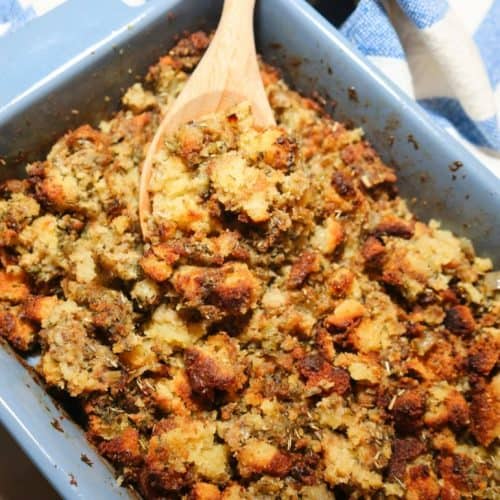
Classic and traditional: cornbread dressing
Start here when you want the classic soul food Thanksgiving dressing experience: buttery-sweet cornbread balanced with savory herbs, vegetables, and chicken stock.
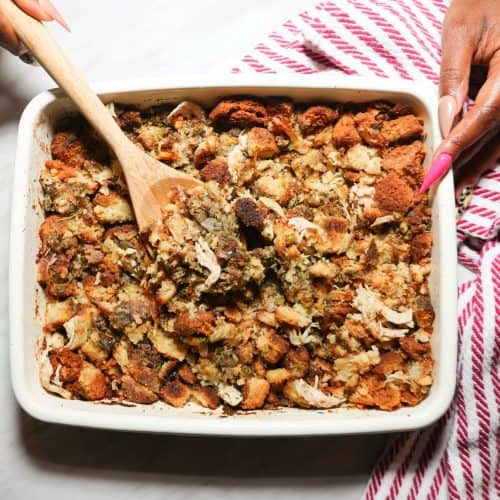
Heartier and crowd-favorite: chicken and dressing
Beautiful Souls seem to especially love my chicken and dressing variation. It starts with the same buttery cornbread and savory seasoned foundation, then adds chicken for a heartier version.
Coastal Virginia: oyster dressing
This one tastes like home to me. I first had oyster dressing as a young adult at a friend’s Thanksgiving gathering in my hometown region of Tidewater Virginia, and I’ve been hooked ever since!
My oyster dressing still starts with that intentional celery, onion, chicken stock, and buttery cornbread base. Then the oysters bring their briny, salty flavor into the dressing. My dad was an avid fisherman, and seafood has always been my favorite. So for me, oyster dressing tastes like a holiday slice of Black traditions in Virginia Beach—salty, meaty, and of the sea.

Deeply savory and old-school: liver dressing
I grew up loving liver, onions, and rice because my mom knew what she was doing with liver in the kitchen! That’s old-school soul food wisdom and know-how. Using my mom’s liver recipe in dressing brings that deeply seasoned, savory flavor into one of Thanksgiving’s most important sides.

Soft and spoonable: creamed corn pudding
Despite the name, this isn’t dessert! Think of it as cornbread dressing’s softer Southern cousin—similar to old-school spoon bread. Instead of distinct cornbread cubes, it has a soft, creamy, spoonable texture while still bringing that savory cornbread flavor to the table.

👩🏾🍳 More ways to Make-It-Your-Way
You can also take that same foundation and make chicken gizzard dressing. And I’m not opposed to having more than one dressing variation on the Thanksgiving table!

My favorites? Give me classic cornbread dressing alongside oyster or liver dressing, and I’m very happy.
Can you take a shortcut when making homemade dressing?
Absolutely. But shortcut the work. Never shortcut the flavor. One shortcut I happily use is Jiffy cornbread mix, and I have a dressing recipe specifically designed around it!


I also use my Instant Pot as a sous chef to sauté the chicken-stock, vegetable, and herb base. It doesn’t eliminate the oven portion of the recipe, but it eliminates another pot competing for stovetop space, and I find the sautéing goes a little faster. That’s especially valuable on Thanksgiving, when every appliance in the kitchen already has an assignment!

❤️ Tap the heart at the top of this post to save it to your favorites on The Soul Food Pot!
Can you make cornbread dressing ahead?
Do I? NOPE.
I’m personally not spending two days making one dressing recipe. I prefer modern appliance efficiency over turning Thanksgiving cooking into a multi-day ritual. So, I make my cornbread and dressing the same day, with all four steps stacked back-to-back.
If you want to spread out the work, you certainly can! You could bake your cornbread the day before and measure your seasonings ahead of time. But that’s Make It Your Way territory. It’s not what I personally do.
❌ 3 mistakes to avoid with cornbread dressing
- Don’t overlook the cornbread itself: When making my dressing, follow my cornbread recipe with its butter, sugar, heavy whipping cream, and cream cheese. That buttery-sweet foundation is intentionally designed to balance the herb-heavy savory broth.
- Don’t add extra chicken stock: More liquid doesn’t automatically equal moister dressing. Too much can turn dressing mushy and dilute the seasoning you’ve carefully built. Trust the tested balance.
- Don’t underestimate the time: My homemade dressing takes about two hours from start to finish because it’s a four-step process. Allow for it. This isn’t the dish I’d squeeze into a spare 30 minutes while the turkey rests. And in my Thanksgiving cooking schedule, dressing is the troublemaker precisely because it needs attention and oven time. So, plan accordingly!
The leftovers
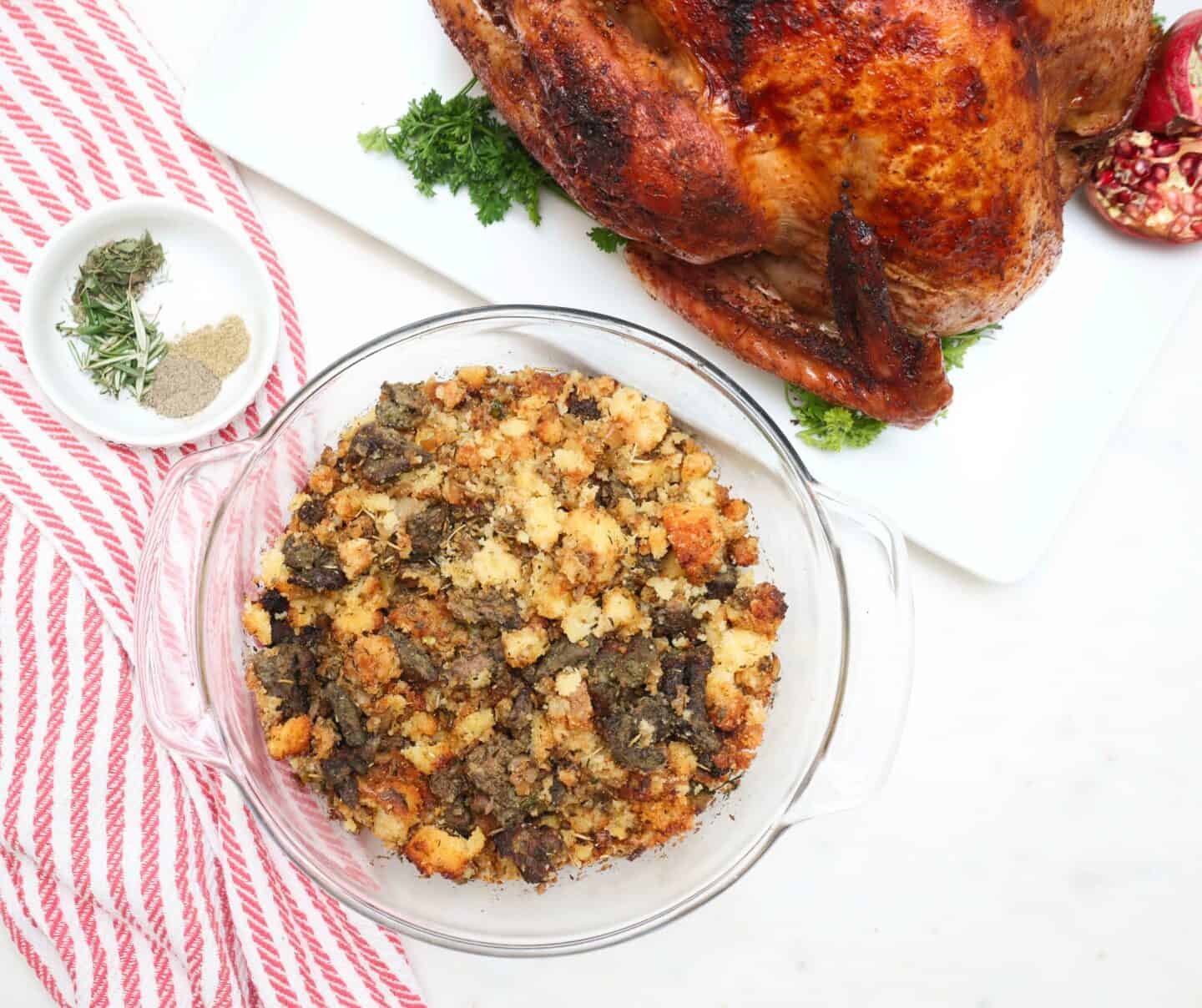
Store leftover cornbread dressing in the refrigerator for up to 5 days. I reheat individual portions in the microwave. And I’ll tell you something else: I think the flavors continue melding and the dressing tastes even better the next day!
If dressing makes you nervous this Thanksgiving…
Remember: Allow time for the four-step process and trust the process.
- Make the cornbread.
- Build the savory broth, vegetable, and herb base.
- Assemble it and bake covered.
- Finish it uncovered.
- And before it ever reaches the oven, remember the texture you’re looking for: Moist, not wet, and definitely not dry.
- You don’t need to guess how much broth to pour in.
- You don’t need to keep adding sage because it’s Thanksgiving.
- You don’t need stale cornbread just because somebody told you dressing requires it.
- And you definitely don’t need a pan of mush!
I’ve tested the balance of sweet, buttery cornbread, savory herbs, vegetables, stock, seasoning, moisture, and baking time over and over.
I’ve already thought this through so you don’t have to.™
Come cook with me: Ready to choose your dressing? Explore the recipes and Thanksgiving guides that put all this dressing wisdom to work!
Like this post? Pin the below image to your Pinterest Soul Food Recipes board!

Lots of cornbread recipes to choose from!
Yes! The best ever soul food cornbread recipes in this one Soul Food Pot post!